

Blog
Thermal Management in Electrical Cabinets Gains Attention Among Plant Engineers

Heat as a Hidden Threat to Automation Equipment
Electrical control cabinets are the nerve centers of industrial facilities. They house controllers, drives, power supplies, relays, contactors and communication equipment that keep production running. Many of these devices generate heat during operation, and power electronics such as variable speed drives and servo amplifiers can produce considerable thermal loads. When heat is not removed effectively, temperatures inside the cabinet rise, and electronic components begin to age more quickly. Capacitors dry out, semiconductors operate closer to their limits and insulation materials degrade. The result can be unexplained faults, nuisance trips and premature failures that interrupt production. Because these problems often develop gradually, the underlying cause may not be obvious. A drive that fails during a hot summer afternoon may have been suffering from inadequate cooling for months. Plant engineers are therefore paying closer attention to thermal management as part of their reliability strategy. They recognize that controlling cabinet temperature ranks among the most cost effective ways to protect valuable automation equipment, extend service life and reduce unplanned downtime across production and process facilities.
Rising Power Density Raises the Stakes
Modern automation equipment has become more compact, allowing more functionality to fit into smaller enclosures. While this is a welcome development for space-constrained facilities, it also increases power density inside cabinets. More devices in less space means more heat concentrated in a smaller volume. At the same time, many plants are adding variable speed drives and servo systems to improve efficiency and precision, further increasing thermal loads. Existing cabinets that were originally designed for simpler control equipment may now contain far more heat-producing components than their cooling systems were intended to handle. Environmental conditions add to the challenge. Cabinets located near furnaces, ovens, compressors or in poorly ventilated areas face higher ambient temperatures. Dust, oil mist and humidity can complicate cooling solutions. Engineers must consider all of these factors when evaluating thermal performance. A careful review of installed equipment, its heat losses and the cabinet environment provides the basis for deciding whether existing cooling remains adequate or needs improvement. Ignoring rising power density can lead to a gradual decline in reliability that is difficult to reverse once failures begin to accumulate.
Fans and Filtered Ventilation
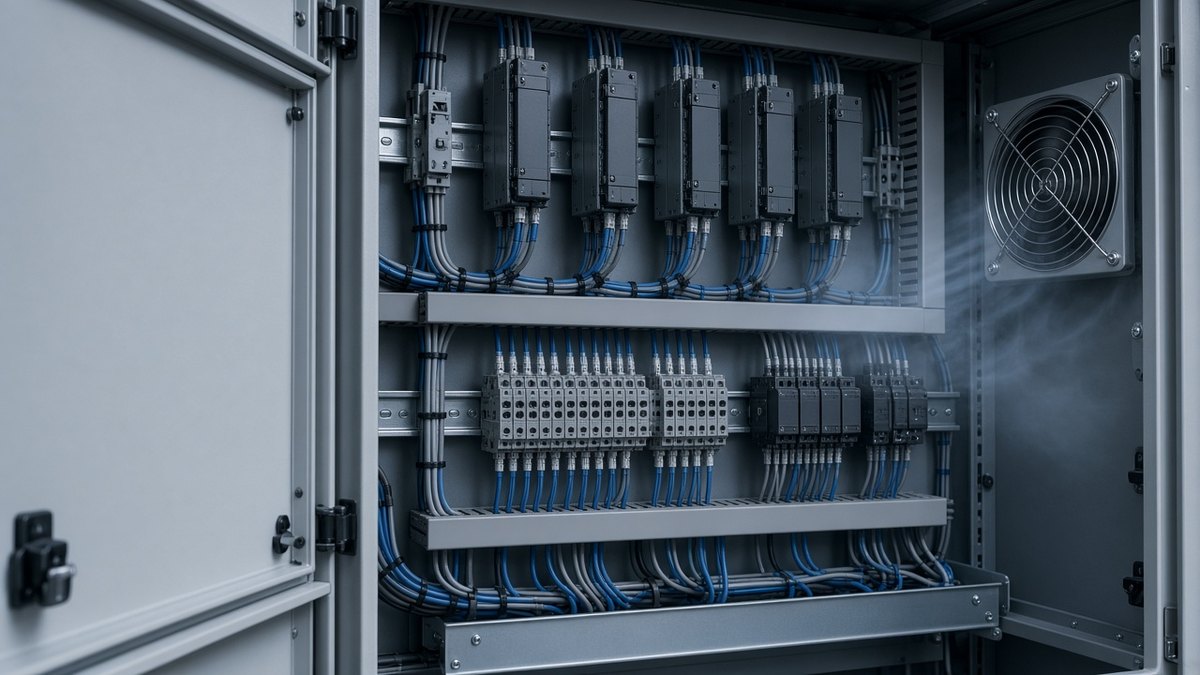
For many applications, forced ventilation with fans remains a practical and economical cooling solution. Filter fans draw cooler ambient air into the cabinet and expel warm air, maintaining internal temperatures within acceptable limits as long as the surrounding air is cool enough. Proper fan selection depends on the heat load, cabinet size and desired temperature difference. Airflow paths must be planned so that cool air passes over the components that generate the most heat. Placing intake fans low and exhaust openings high takes advantage of natural convection. Filters protect equipment from dust, but they must be inspected and replaced regularly, because clogged filters dramatically reduce airflow. Fan condition is equally important. Bearings wear over time, and a fan that slows or stops can allow temperatures to climb unnoticed. Many power electronics devices also contain internal cooling fans that require attention during maintenance. Replacing aging fans before they fail is a simple preventive measure that protects far more expensive equipment. High quality industrial fans designed for continuous duty offer long service life and stable performance, making them a sound investment for reliable cabinet cooling.
When Closed Cooling Systems Are Needed
In some environments, simple ventilation is not enough. When ambient air is too hot, too dirty or too humid, bringing it into the cabinet may cause more harm than good. In these cases, closed cooling solutions provide an alternative. Air-to-air heat exchangers transfer heat from the cabinet interior to the outside without mixing the air streams, keeping contaminants out while removing heat. Cabinet air conditioners actively cool the internal air and can maintain temperatures below ambient levels, which is essential in very hot locations. Air-to-water heat exchangers use chilled water to remove large heat loads in demanding applications. Each solution has advantages and limitations in terms of cost, energy use and maintenance requirements. Engineers must also consider condensation, which can form when cooled surfaces fall below the dew point. Proper sealing of cabinets, correct temperature settings and condensate management help prevent moisture problems. Selecting the right closed cooling system requires a clear understanding of heat loads, ambient conditions and required internal temperatures. When chosen and maintained correctly, these systems provide dependable protection for sensitive electronics in even the most challenging industrial environments.
Good Layout Practices Inside the Cabinet
Effective thermal management begins with thoughtful cabinet layout. The arrangement of components influences how heat is generated, distributed and removed. Heat-producing devices such as drives and power supplies should be positioned so that their exhaust air does not flow directly into other sensitive equipment. Manufacturers’ recommendations for clearance above and below devices should be respected to allow proper airflow. Cable ducts, wiring bundles and accessories should not block ventilation openings or create dead zones where hot air accumulates. Separating high power sections from control electronics can reduce thermal and electrical interference. In some cases, mounting drives with heat sinks through the cabinet wall allows much of the heat to be dissipated outside the enclosure. Internal circulation fans can help eliminate hot spots in larger cabinets. When modifications are made over time, such as adding new devices, it is important to reassess airflow and thermal performance. Small changes can have unexpected consequences if they disrupt established airflow patterns. A well organized cabinet is not only easier to maintain and troubleshoot, but also more likely to keep temperatures within safe limits throughout years of continuous operation.
Monitoring and Preventive Maintenance
Monitoring cabinet temperatures provides early warning of cooling problems. Simple thermostats can control fans and trigger alarms when temperatures exceed set limits. Temperature sensors connected to control systems allow trends to be recorded and analyzed, revealing gradual changes that might otherwise go unnoticed. Many drives and power supplies also report internal temperatures, offering additional insight into thermal conditions. Thermal imaging during routine inspections can identify hot spots caused by loose connections, overloaded components or blocked airflow. Preventive maintenance routines should include cleaning or replacing filters, checking fan operation, inspecting seals and verifying that cooling units function correctly. Seasonal changes deserve particular attention, since cooling systems that perform well in mild weather may struggle during hot periods. Keeping spare fans and filters available allows quick replacement when wear is detected. Recording maintenance actions and temperature readings builds a history that supports better decisions about upgrades. By making thermal monitoring a standard part of maintenance, plants can address cooling issues before they result in component failures, protecting both equipment and production schedules from avoidable disruption throughout the year.
A Simple Measure With Lasting Benefits
Thermal management may seem like a basic engineering concern, yet its impact on reliability is profound. Keeping electrical cabinets within appropriate temperature ranges extends the life of automation components, reduces nuisance faults and helps maintain stable production. The measures involved are often straightforward: selecting suitable fans or cooling units, maintaining filters, planning cabinet layouts carefully and monitoring temperatures. When applied consistently, these practices deliver benefits that far exceed their cost. As automation continues to expand and power density increases, the importance of effective cooling will only grow. Plant engineers who give thermal management the attention it deserves can prevent many of the failures that would otherwise consume maintenance resources and disrupt operations. Reliable access to replacement fans and cooling components further supports this effort, ensuring that worn parts can be renewed promptly. Ultimately, a cool and clean cabinet ranks among the most effective foundations for dependable automation. By recognizing heat as a manageable risk rather than an unavoidable condition, manufacturers can protect their investments and keep their production lines running smoothly through every season and operating condition.